In eastern Lithuania, a herbal producer with more than 140 years of experience is exploring how renewable energy and smarter energy decisions could help protect product quality, manage costs and keep a remarkable local tradition competitive.
Rooted in Tradition, Looking to the Sun
In Lithuania, žolelių arbata—herbal tea—is rarely just another drink.
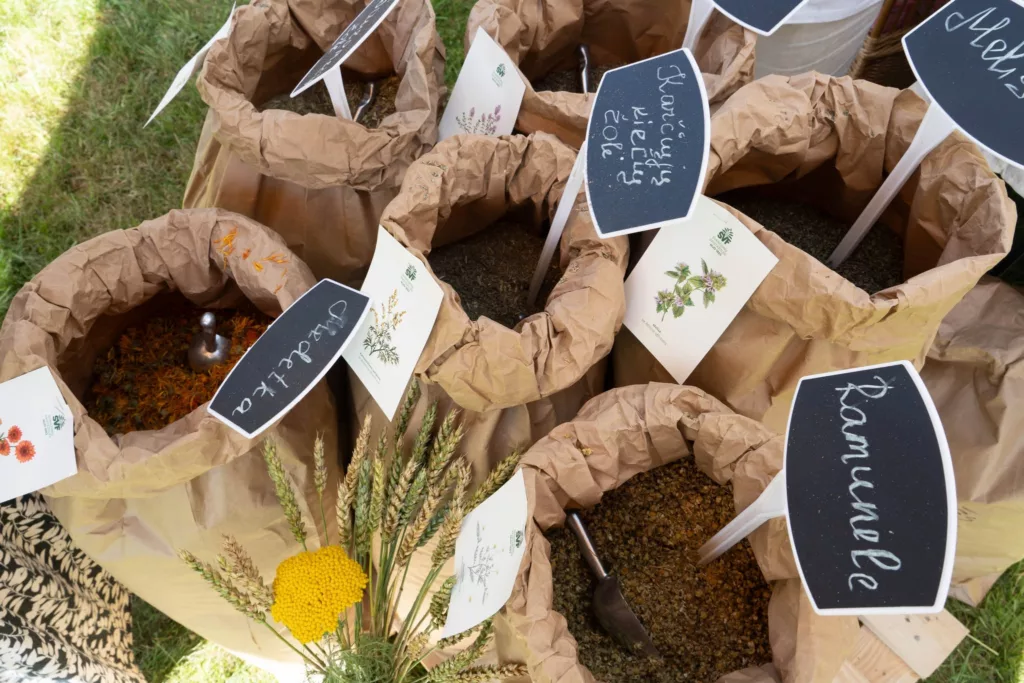
For many people, the scent of thyme, mint or chamomile brings back familiar memories: herbs drying in a family kitchen, tea prepared at the first sign of a cold, or a warm cup after coming indoors on a dark autumn evening. This knowledge has been passed down quietly, from one generation to the next.
In the forests and meadows surrounding Švenčionys, the relationship between people and medicinal plants has also shaped the region’s identity and economy. It is here that Švenčionių Vaistažolės—a name that literally connects medicinal herbs with the town of Švenčionys—has built a business rooted in nature.
Today, the company is considering how another natural resource could support its future: sunlight.
Through the EENOVA project, Švenčionių Vaistažolės has examined how better energy management and additional renewable electricity could strengthen its production, reduce environmental impact and support long-term competitiveness.
More than 140 years of herbal knowledge
Founded in 1883 by pharmacist N. Taraseiskis, Švenčionių Vaistažolės has grown from a small herbal workshop into one of the longest-established herbal product manufacturers in the Baltic region.
More than 140 years later, medicinal plants remain at the heart of the business. Yet the production environment is far removed from the simple image of herbs being gathered and tied into bundles by hand.
Behind each familiar box of herbal tea is a modern manufacturing system supported by laboratories, specialist equipment, controlled storage areas and packaging lines. Traditional botanical knowledge has not disappeared. Instead, it now works alongside contemporary food-production methods and European quality requirements.
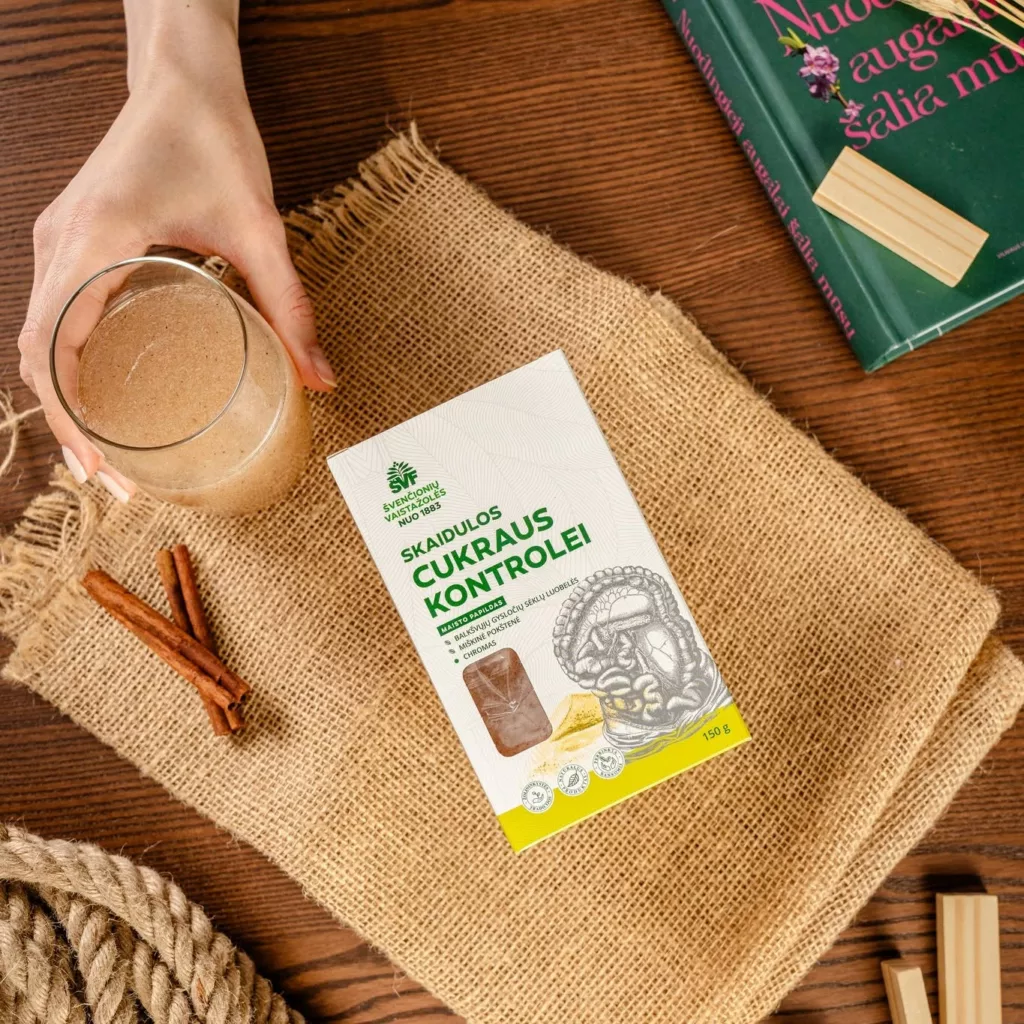
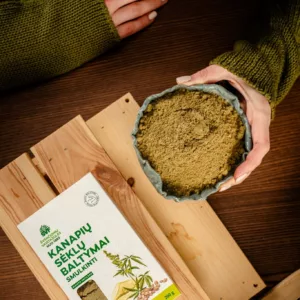
The company’s portfolio includes classic herbal teas made with plants such as chamomile, peppermint, thyme and lemon balm, as well as functional blends, food supplements and private-label products for European partners. Newer products, including the “Sugar Control” fibre complex, illustrate how traditional knowledge can continue to inspire products developed for changing consumer needs.
It is a combination that feels particularly relevant in Lithuania: respect for what has been inherited, together with a practical determination to improve it.
Energy: the ingredient that never appears on the label
A box of herbal tea may look simple. The work behind it is not.
Medicinal plants must first be collected or purchased, inspected and carefully sorted. Ingredients are blended according to individual recipes and analysed to ensure that they meet the required quality standards. Only then can the finished products be packaged, stored and prepared for distribution in Lithuania and abroad.
Energy supports every step.
Storage conditions must protect sensitive raw materials. Laboratory equipment must operate accurately. Packaging lines need a reliable electricity supply, while warehouse and logistics operations depend on lighting, ventilation and other supporting systems.
Energy never appears on the ingredients list, but it is present throughout the entire production process.
This is why energy management is not simply an environmental issue for a herbal or food manufacturer. It is directly connected to product quality, food safety, production continuity and cost control.
Sustainability begins with practical details
Švenčionių Vaistažolės has already introduced a range of measures intended to make its products and processes more responsible.
Its tea bags are produced without glue or metal staples, using string technology instead. Recyclable or biodegradable materials are used wherever possible, while responsibly sourced alternatives are increasingly replacing conventional plastic packaging.
Quality is monitored through phytochemical, microbiological and radiological analyses. Certifications and management systems including ISO 22000, ISO 9001, GMP, HACCP and ECOagros reflect the importance the company places on traceability, safety and consistent production standards.
Not every one of these measures directly reduces energy consumption. Together, however, they reveal an important part of the company’s culture: sustainability is approached through continuous, practical improvements rather than one dramatic gesture.
The same thinking shaped its involvement in EENOVA.
Turning an energy assessment into a business tool
Food and beverage manufacturers across Europe are facing a difficult combination of pressures. Energy prices remain a concern, customers increasingly expect evidence of responsible production, and companies must continue investing in quality and innovation to compete internationally.
For a regional manufacturer, deciding where to invest first is not always straightforward. Renewable energy may appear attractive, but management still needs reliable answers: How much energy could be generated? What emissions could be avoided? How long would it take for the investment to pay for itself?
Through EENOVA, Švenčionių Vaistažolės assessed how energy-efficiency improvements and renewable energy could support its production system.
One of the opportunities highlighted was the possible expansion of the factory’s photovoltaic installation. The assessment estimated that an additional 70 kW of solar capacity could:
- generate approximately 70 MWh of renewable electricity each year;
- avoid around 10.5 tonnes of CO₂ emissions annually;
- achieve an estimated payback period of approximately 5.9 years.
These figures describe a potential future investment, not a completed installation. That distinction matters.
The value of the assessment lies in giving the company a clearer basis for deciding whether and when to proceed. Instead of relying on broad assumptions about the benefits of solar energy, management can consider a defined technical option with estimated energy, environmental and financial results.
In this sense, an energy assessment is more than a list of recommendations. It turns sustainability ambitions into decisions that can be discussed, compared and planned.
The benefits go beyond a lower electricity bill
Reducing energy expenditure is an obvious advantage, but the business case reaches further.
More predictable operating costs can make financial planning easier. Reliable energy systems help maintain stable production conditions. Greater use of locally generated renewable electricity can also reduce exposure to future energy-market volatility.
For a company working with natural raw materials, consistency is especially important. Herbs must be handled and stored correctly, testing must remain reliable, and packaging operations must run efficiently. Better energy management supports all of these activities.
It can also strengthen the story behind the finished product.
Consumers increasingly look beyond what is inside a package. They want to understand where ingredients come from, how products are manufactured and whether companies are taking credible steps to reduce their environmental impact.
For Švenčionių Vaistažolės, this creates a natural connection between the product and the production process. A company whose identity is so closely tied to nature has a strong reason to consider how responsibly it uses resources behind the factory doors.
A lesson for Europe’s agri-food businesses
The experience of Švenčionių Vaistažolės reflects a challenge shared by many small and medium-sized manufacturers across Europe: how can a business modernise without losing the identity that made it valuable in the first place?
The answer does not have to involve replacing tradition with technology.
In Švenčionys, botanical knowledge remains central to the company’s work. Modern laboratories help verify quality. Contemporary production equipment makes it possible to serve larger markets. Energy assessment adds another layer by showing where efficiency and renewable power could support future growth.
Each element has a different role, but they serve the same purpose: ensuring that a long-established regional business can remain relevant, resilient and competitive.
The wider lesson from EENOVA is that energy should not be treated as a separate technical topic. It runs through the entire value chain—from the arrival of raw materials to the moment a finished package leaves the warehouse.
Understanding that connection is often the first meaningful step towards more sustainable production.
Not every company will begin with a major investment. Some will start by measuring consumption more accurately. Others may identify inefficient equipment, adjust operating schedules or examine renewable-energy opportunities. What matters is moving from assumptions to evidence.
Preserving the roots while preparing for what comes next
For generations, herbs from eastern Lithuania have been valued for supporting people’s wellbeing. Today, Švenčionių Vaistažolės is applying a similar long-term perspective to the health of its own business.
Its EENOVA assessment shows how environmental responsibility can be translated into practical choices: choices about energy, investment, production resilience and future competitiveness.
There is something distinctly Lithuanian in this approach. It is not about announcing a complete reinvention. It is about taking care of what already exists, improving it patiently and leaving it stronger for the next generation.
The herbs still begin in Lithuania’s fields and meadows. The knowledge still comes from more than a century of experience. But the future of the factory may increasingly be supported by energy generated on its own roof.
And should the proposed solar expansion go ahead, sunlight will support the company’s plants twice: first as they grow, and later as they move through production on their way to customers across Europe.