Innovation & cooperation are key
The Slovenian dairy value chain is going through a challenging period. On one hand, strong innovation and high-quality products continue to drive progress and consumer interest. On the other, increasing market pressure and structural challenges are threatening its long-term resilience.
This tension is also visible at the European level. The market is currently oversupplied, while purchase prices for milk continue to fall. For producers, this creates a lot of uncertainty. In many cases, the problem is no longer how to produce more, but how to sell what is already produced. At the same time, long-term contracts are becoming increasingly difficult to secure.
As Miran Božič, Director of Planika Dairy, explains:
“At the moment, the situation is very difficult. We cannot sell all the milk, and in some cases there are simply no buyers. Because supply fluctuates throughout the year, long-term contracts are hard to secure.”
Despite these challenges, Planika continues to purchase all milk from local farmers, demonstrating a strong commitment to the local value chain, rural communities, and long-term partnerships.
Božič also highlights a broader issue:
“While energy security is important, it is food that ultimately ensures survival – especially in times of crisis. Strengthening trust and building a clear national strategy for food security is therefore essential.”
Innovation still matters
Even in these conditions, innovation remains an important strength. In 2026, Planika Dairy launched two new products, both of which received awards for innovation.
These products combine traditional knowledge with modern nutritional approaches, showing that the Slovenian agri-food sector still has strong potential to deliver high-value products. The company received the Innovative Food 2026 award for its kefir enriched with fibre, as well as the award for the most innovative product at the Agrobiznis conference for its organic yogurt with cornelian cherry.


Award-winning innovative dairy products from Planika Dairy (2026) (Source: Planika Dairy webpage)
But innovation alone is not enough
At the Agrobiznis conference in March 2026, it became clear that innovation alone will not solve the deeper challenges. Producers are facing strong pressure from retail chains, which increasingly favour private labels or imported products. At the same time, many small farms are struggling to remain economically viable. These are not new issues, but they are becoming more pronounced.
So the question is shifting: it is no longer just about how to innovate, but how to ensure that Slovenian products actually stay on the shelves.
At the same time, participants also stressed the importance of food security at the national level. While energy security is increasingly discussed, the ability to maintain local food production in times of crisis is equally critical. Short supply chains, stronger cooperation, and continued innovation were identified as essential elements for long-term resilience.
Cooperation makes the difference
A strong message from the discussions is the critical role of cooperation. Stronger collaboration between farmers, cooperatives, and processors is seen as essential to improve market position and respond to increasing pressure from retailers. One message came up again and again: without cooperation, the system does not hold.
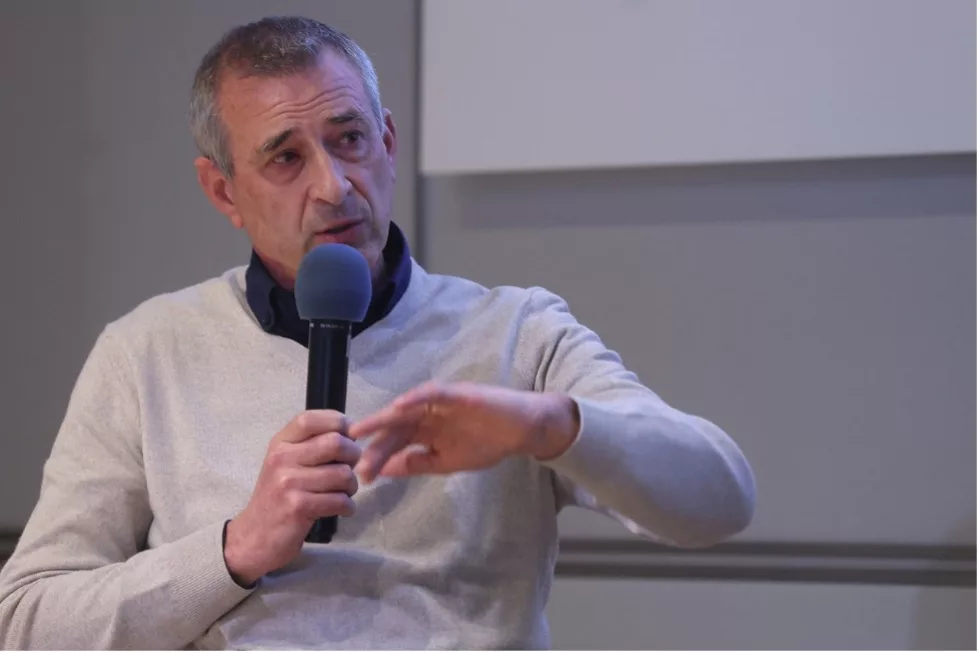
“A small farmer cannot survive without cooperation – without a cooperative or another organisation. Trust and mutual support are essential if we want to preserve Slovenian agriculture.” (Miran Božič)
From project to practice
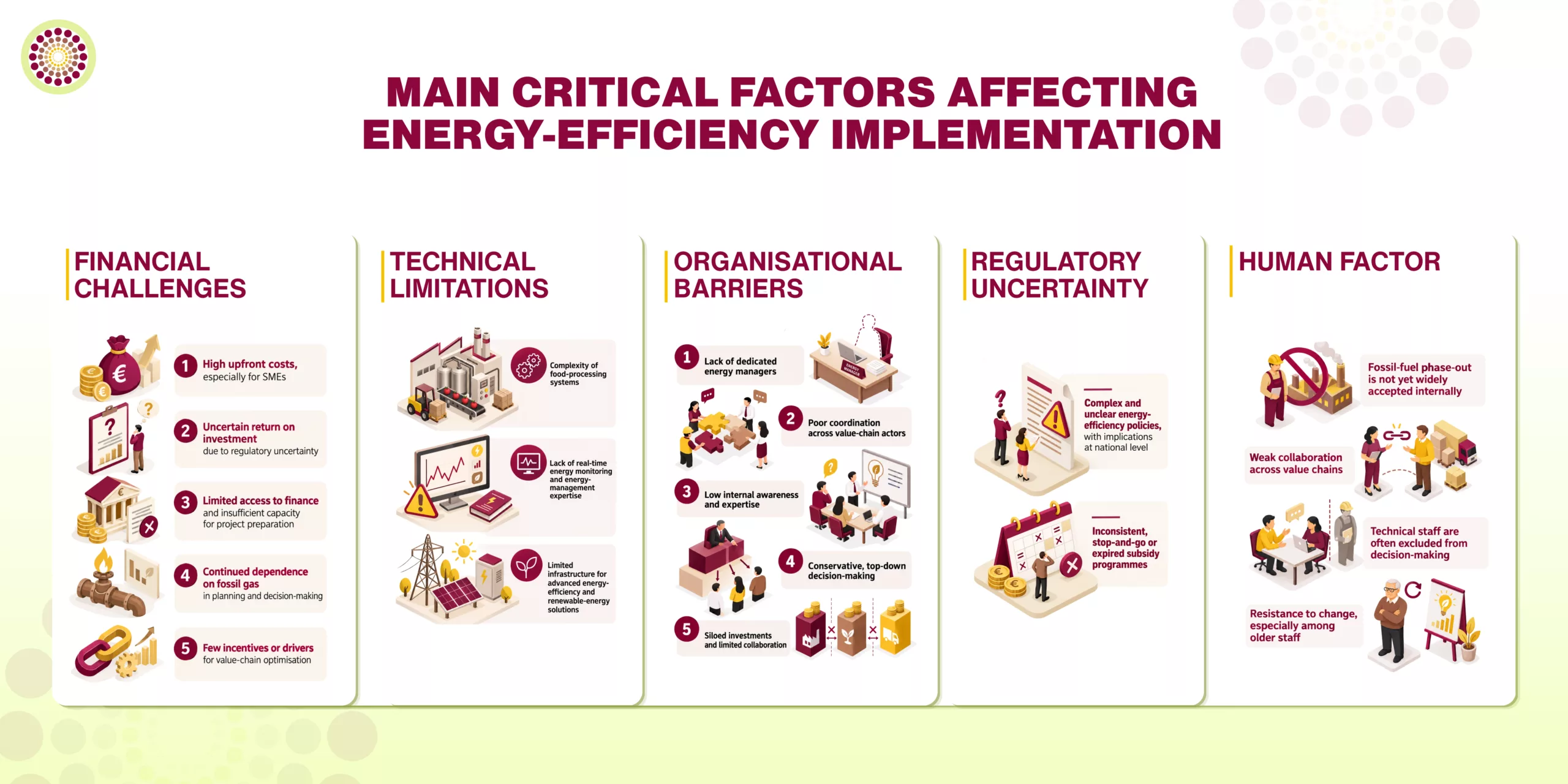
This idea is not just theoretical—it is already taking shape in practice. In Slovenia, what started as a project focused on energy efficiency gradually evolved into something broader, bringing farmers, processors, and other stakeholders closer together. Through energy audits, data collection, and a better understanding of where energy is used in production, companies were able to identify practical improvements and opportunities for joint action. At the same time, it highlights that technical solutions alone are not enough. With active involvement from Mlekarna Planika, the cooperation expanded to include the Tolmin Agricultural Cooperative.
It shows that cooperation doesn’t just happen on its own. It takes time, trust, and shared challenges. In the long run, these connections, combined with practical, data-driven solutions, are what make a food value chain more resilient, especially in times of geopolitical uncertainty.
Without stronger cooperation across the value chain, even the most innovative products may struggle to stay on the market. In the end, it is these connections and partnerships that will determine the future of the Slovenian dairy sector.
Source of citations: Agrobiznis Conference, article “Kako bi lahko na trgovskih policah ohranili več slovenskih izdelkov?” by Jana Petkovšek Štakul, https://agrobiznis.finance.si/novice/kako-bi-lahko-na-trgovskih-policah-ohranili-vec-slovenskih-izdelkov/a/9045620