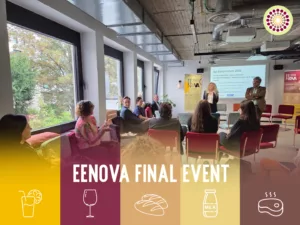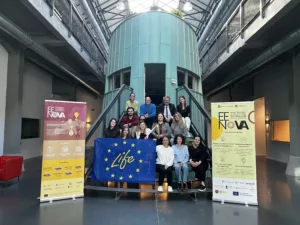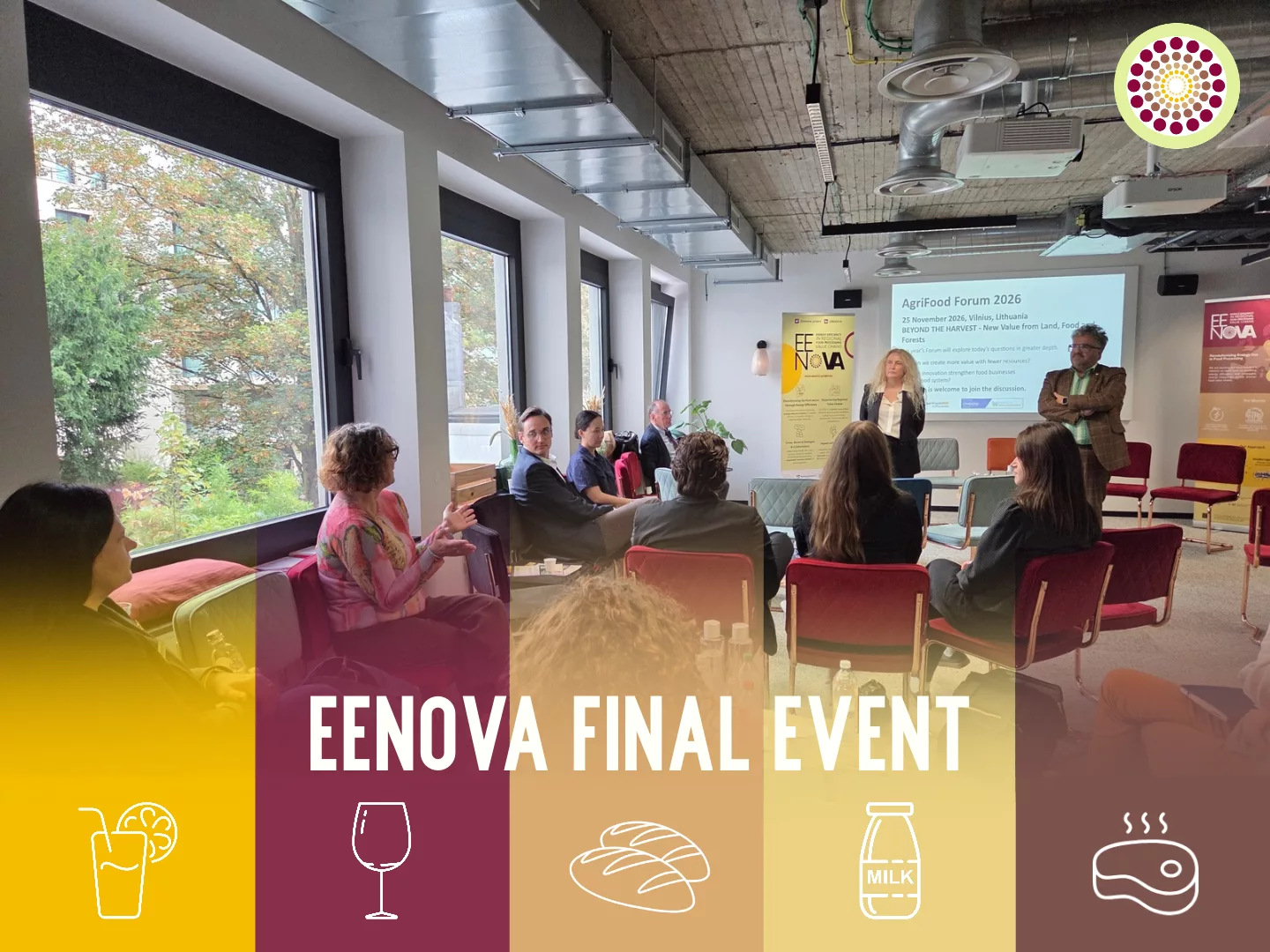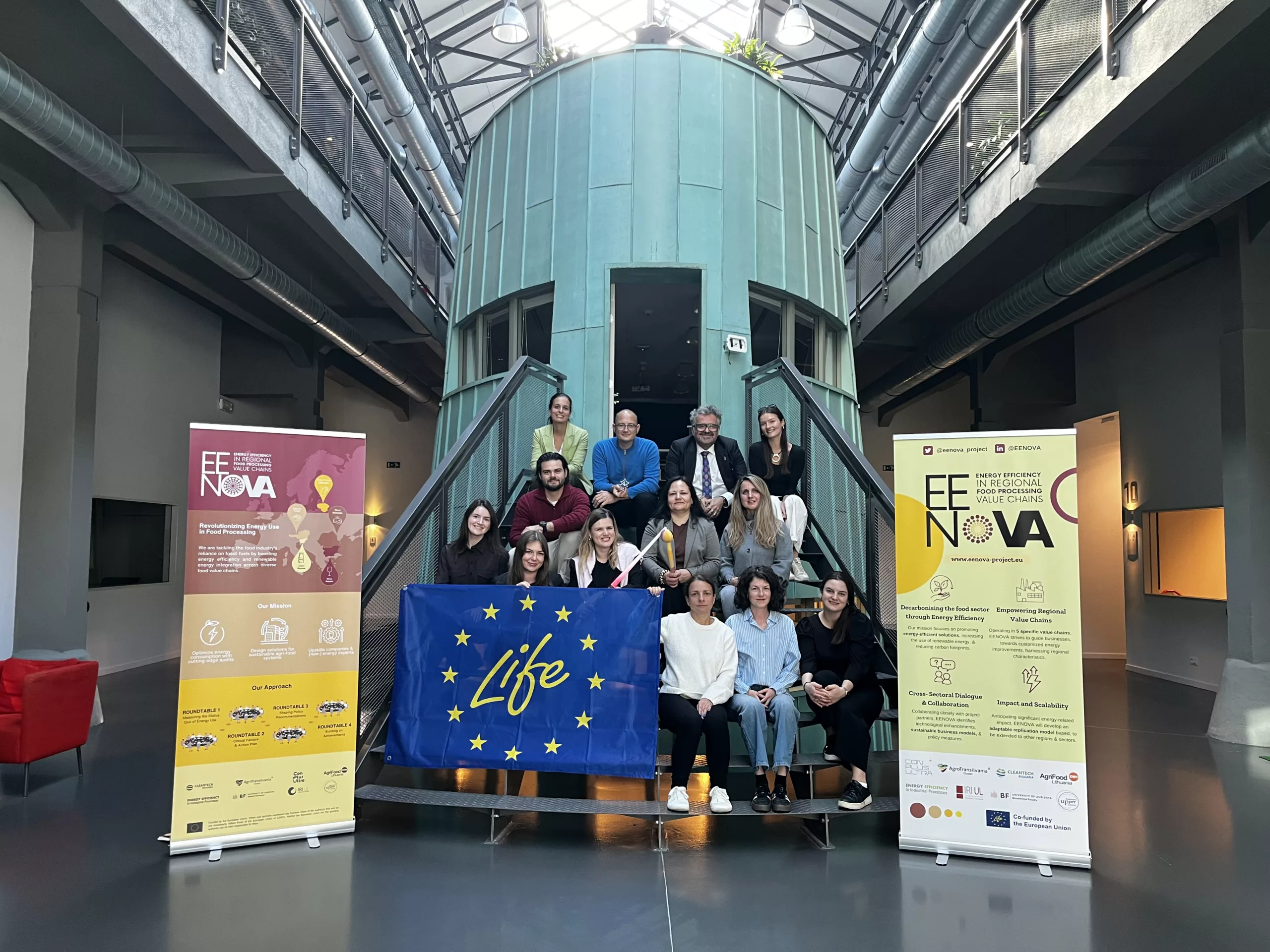
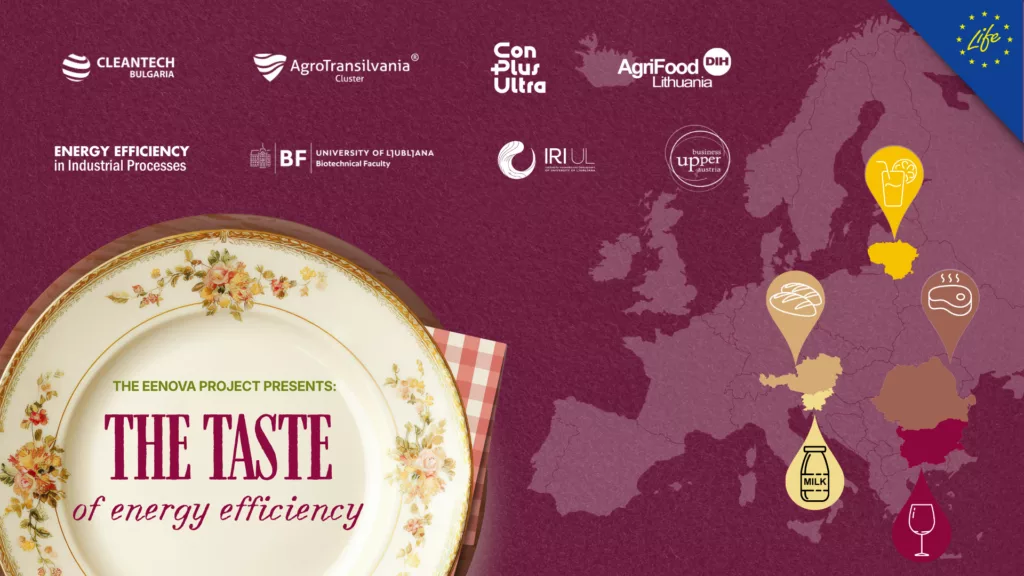
What does energy efficiency taste like? At EENOVA’s final event on 7th October 2026 in Brussels, the answer included Slovenian cheese, Romanian charcuterie, Bulgarian wine, Austrian cookies, Lithuanian mineral water and herbal tea.
Held in Brussels and organised by EEIP, The Taste of Energy Efficiency brought together industry representatives, policymakers and fellow EU-funded projects to explore how food-processing businesses can turn energy-saving opportunities into practical action.
EENOVA plated up the topic in three courses: the bigger policy picture, experiences from its five regional pilots, and the approaches developed by other LIFE Clean Energy Transition sister projects. Together, they showed how decisions made at the European level connect with the everyday realities of running a mill, dairy, winery or drinks business.
First on the menu: the big picture
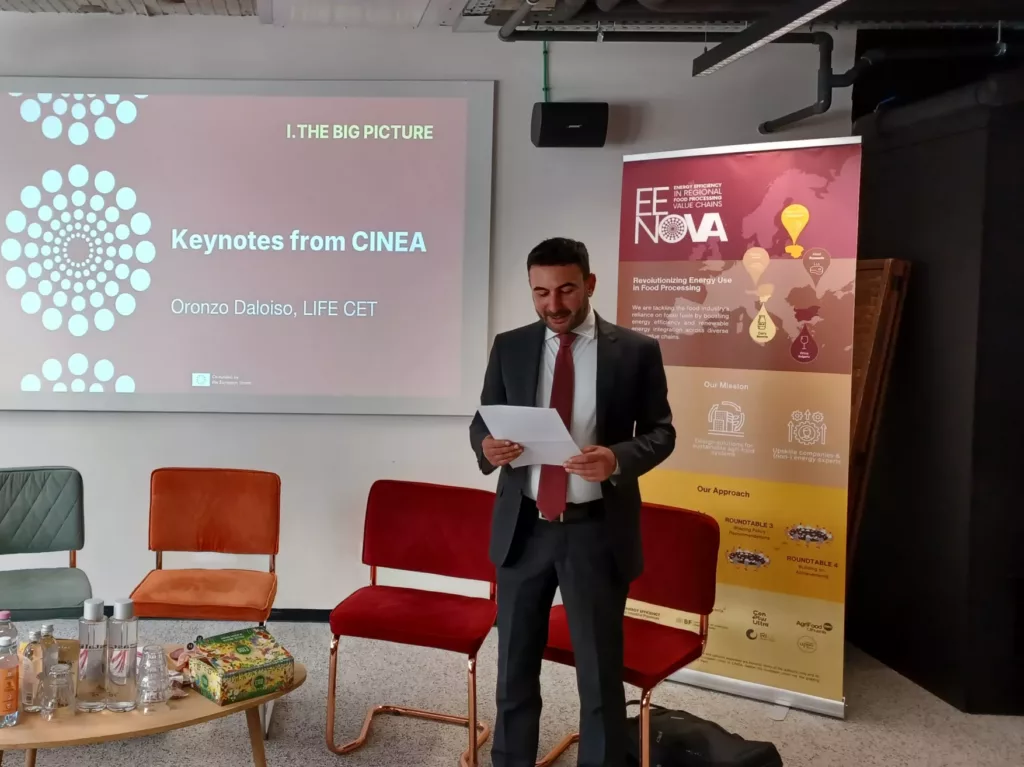
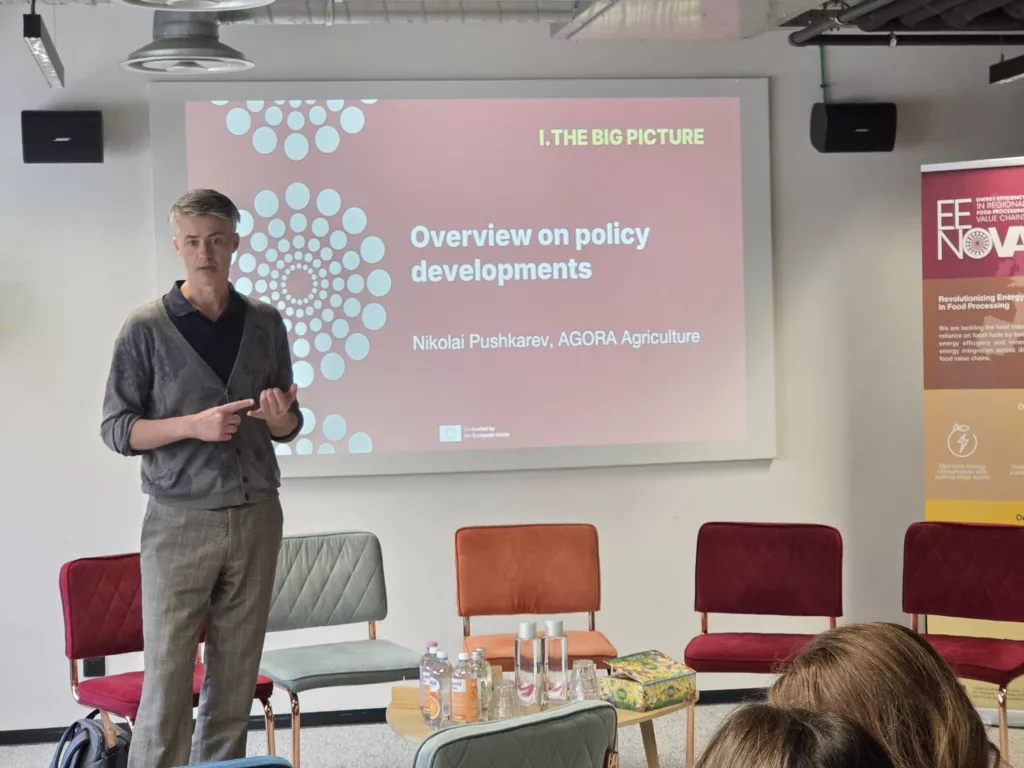
After the welcoming words by EEIP’s president Rod Janssen, the opening session set the context for the day with a keynote from Oronzo Daloiso of CINEA’s LIFE Clean Energy Transition programme and a policy perspective from Nikolai Pushkarev of Agora Agriculture.
Mr. Pushkarev’s presentation placed food production within the wider challenge of achieving a climate-neutral Europe. Land faces increasing demands: producing food, supplying biomass, generating renewable energy, storing carbon and restoring nature, while supporting rural livelihoods.
This widened the conversation beyond the energy bill of an individual factory. Food-processing companies operate within a system shaped by agricultural production, resource availability, consumption patternsand climate pressures. Improving the efficiency within that system requires an understanding of how its different components interact.
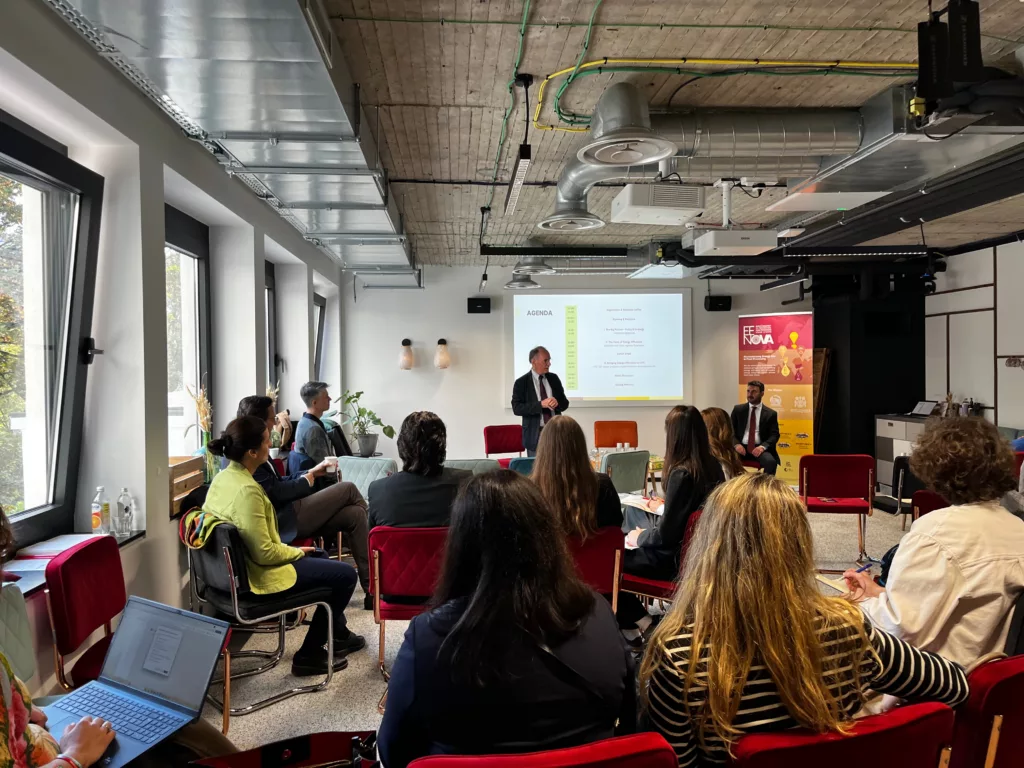
For EENOVA, this was a fitting starting point. The project’s value-chain approach looks beyond individual premises to consider what companies can achieve through cooperation with suppliers, processors, packaging businesses and transport providers.
The main course: experience from the five regions
The second session moved from policy to work on the ground. Harald Grill, our project coordinator from ConPlusUltra, introduced EENOVA’s methodology and emerging results, followed by presentations from the five pilot regions: bakery in Austria, dairy in Slovenia, wine in Bulgaria, meat in Romania, and water and soft drinks in Lithuania.
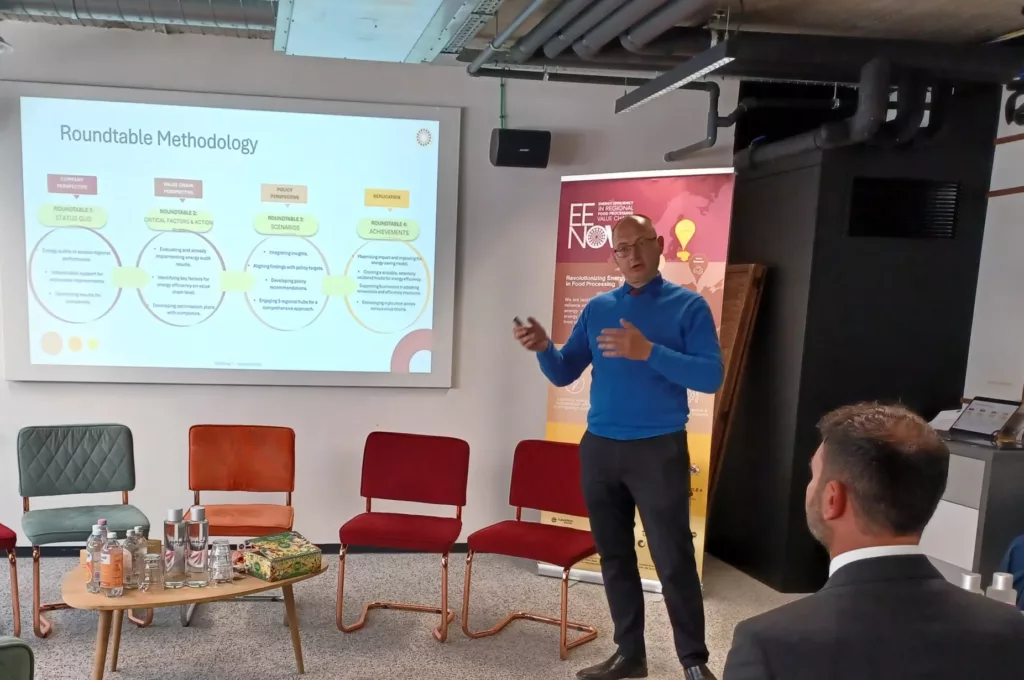
EENOVA’s approach starts with energy audits and continues through four roundtables addressing company needs, value-chain opportunities, policy conditions and replication. A neutral intermediary helps companies navigate that process, build trust and identify opportunities for joint action.
The project’s experience puts governance at the centre of energy optimisation. Before companies can coordinate investments or share resources, they need clear responsibilities, confidence in their partners and a practical reason to cooperate.
The preliminary results presented showed how this approach is translating into action: 15 energy audits identified 74 improvement measures, 19 of which have already been implemented, with others progressing towards implementation. The regional presentations then brought these findings to life through the experiences of the companies involved.
Different businesses, familiar barriers
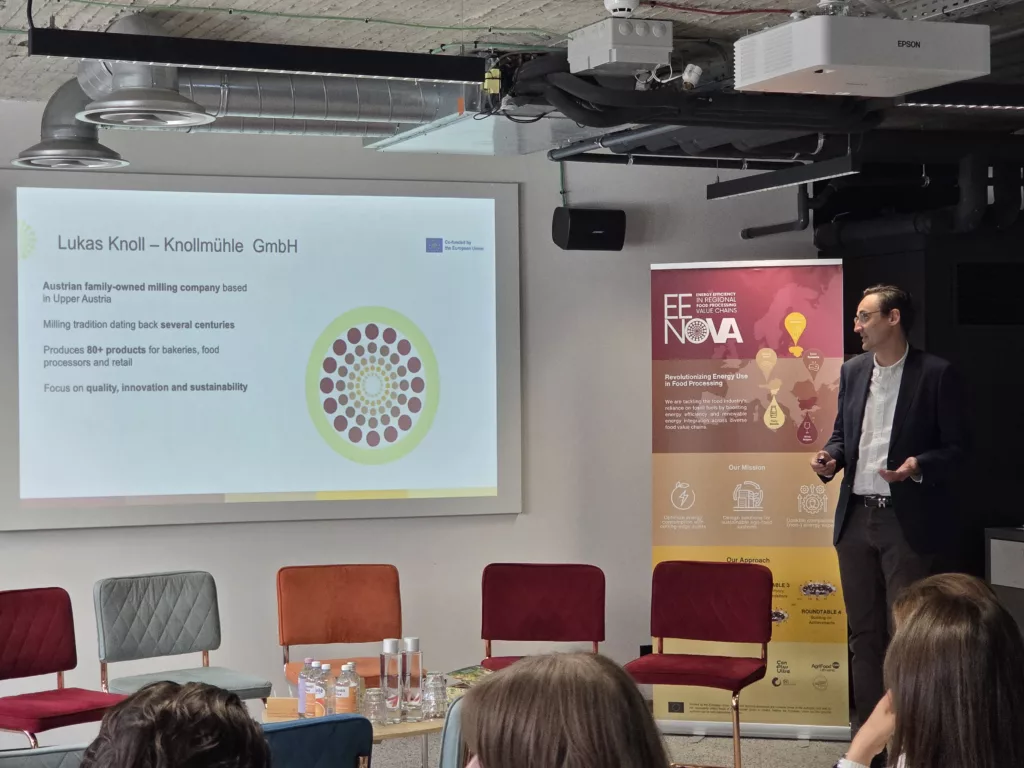
For Lukas Knoll of Knollmühle, the Austrian pilot demonstrated the value of an external perspective on a business operating around the clock. The audit identified opportunities in pneumatic conveying, solar generation with storage, and fleet electrification. Conveying systems became the first priority because of their continuous use. Even a relatively straightforward improvement took longer than expected when several technical disciplines had to be coordinated, illustrating why implementation needs sustained attention after the audit.
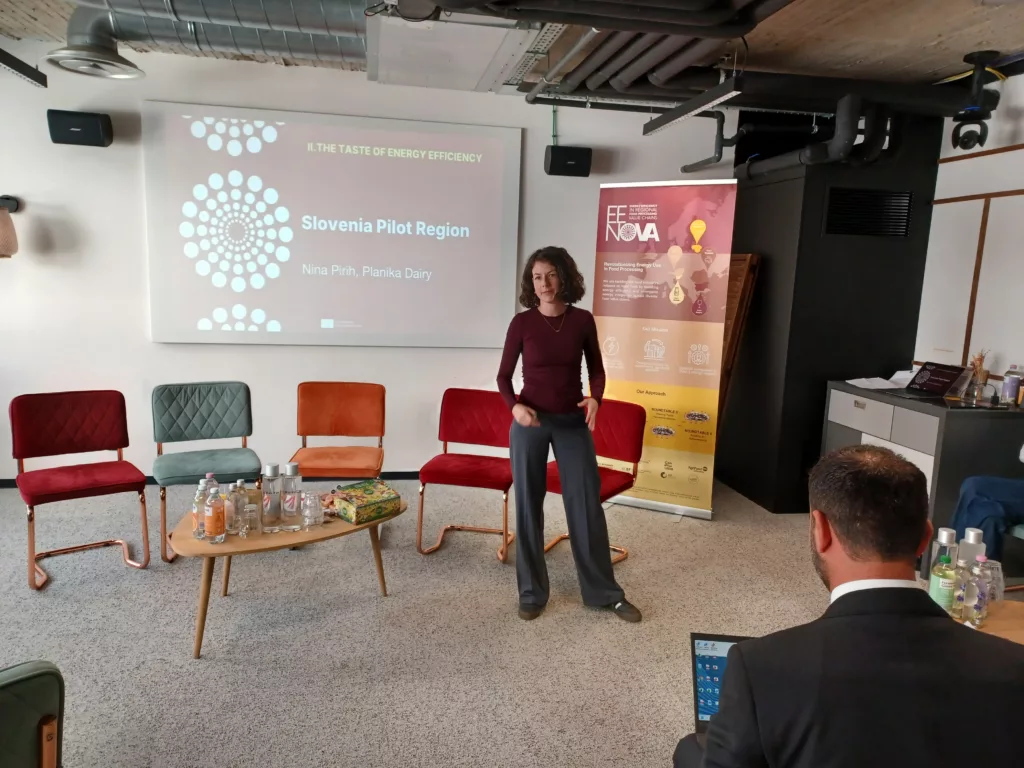
Nina Pirih of Planika Dairy described the Slovenian dairy value chain, connecting milk processing with packaging and logistics. Cooling, heat, steam and cleaning all contribute to its energy needs. Measures ranged from modest investments, such as replacing thermostatic valves, to heat recovery, cooling optimisation and cooperative renewable energy solutions. The presentation also showed how permits, investment costs, staff engagement and material constraints can slow progress. Cooperation offers further opportunities, but requires its own organisational groundwork.
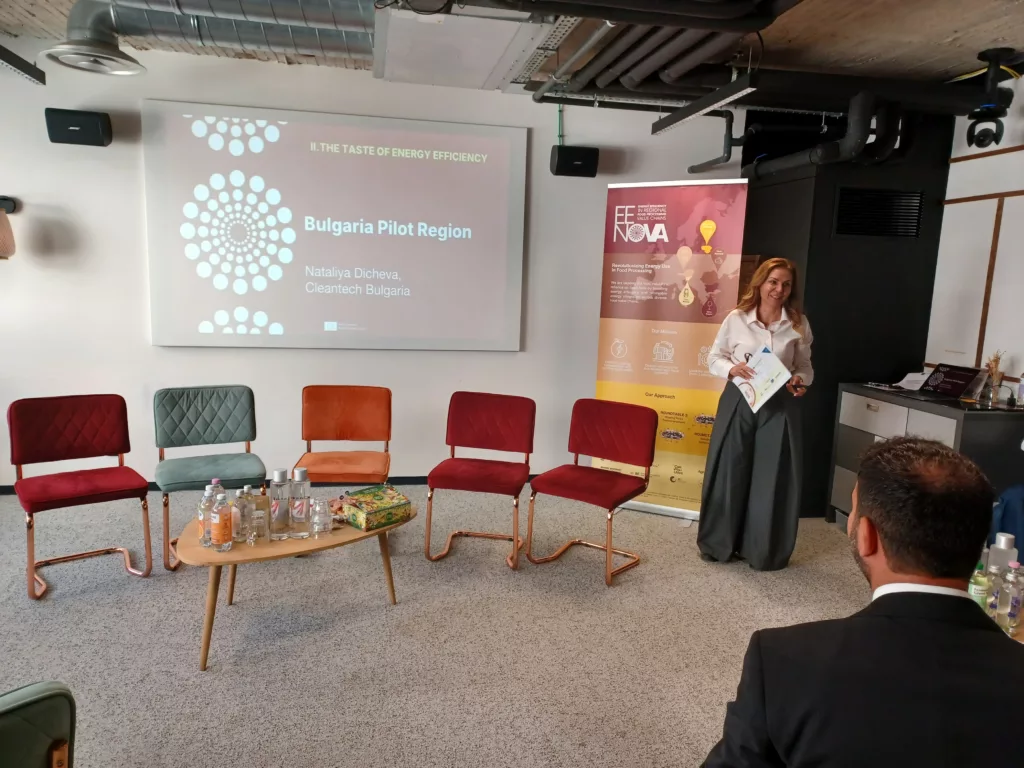
In Bulgaria, Nataliya Dicheva of CleanTech Bulgaria presented the wine value chain in the Burgas and Pomorie region. Irrigation, pumping, cooling and cellar operations featured among the main energy demands. Investments in infrastructure, production equipment and photovoltaics were accompanied by a longer-term roadmap for digitalisation, renewable energy and more circular resource use. The regional work also explored adapting EENOVA’s methodology to construction, suggesting that its cooperation process could travel beyond food processing with suitable sector-specific adjustments.
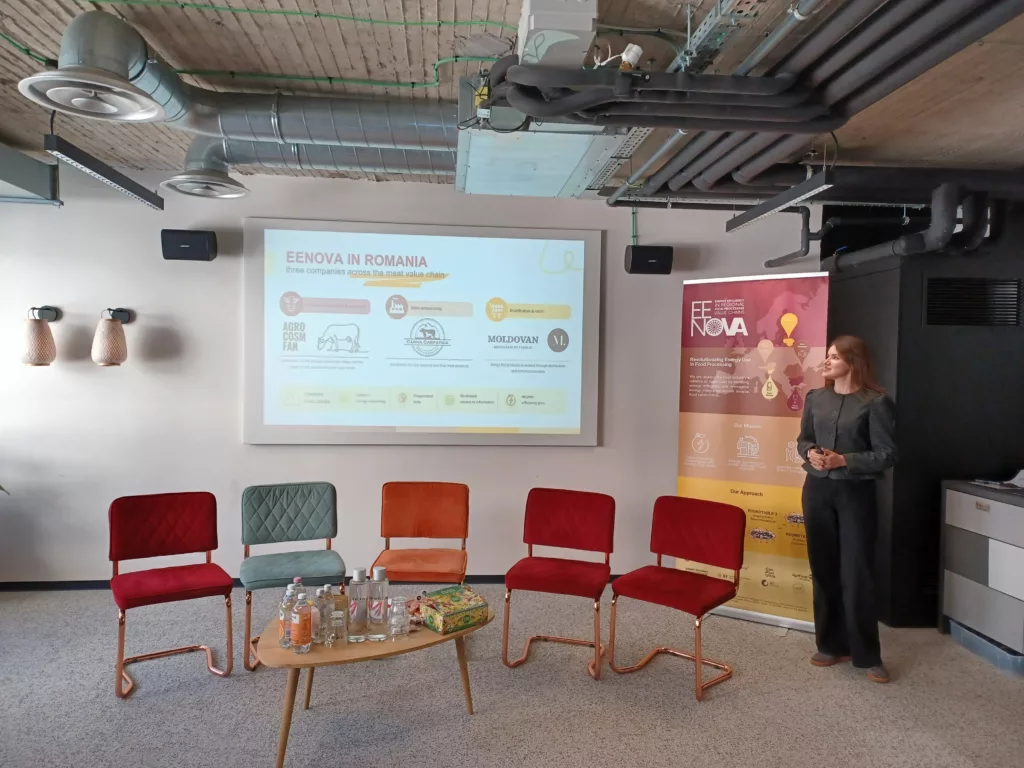
Anastasia Gorobivschi of AgroTransilvania Cluster brought the Romanian meat value chain into the discussion. Its experience exposed the gap between a technically feasible recommendation and a project a company is ready to implement. Limited finance, permitting delays, insufficient in-house expertise and fragmented data all affect that readiness. One concrete example was Carna Carpatica’s investment in an air-to-air heat pump for its administrative building, drawing on the support and expertise gained through EENOVA.
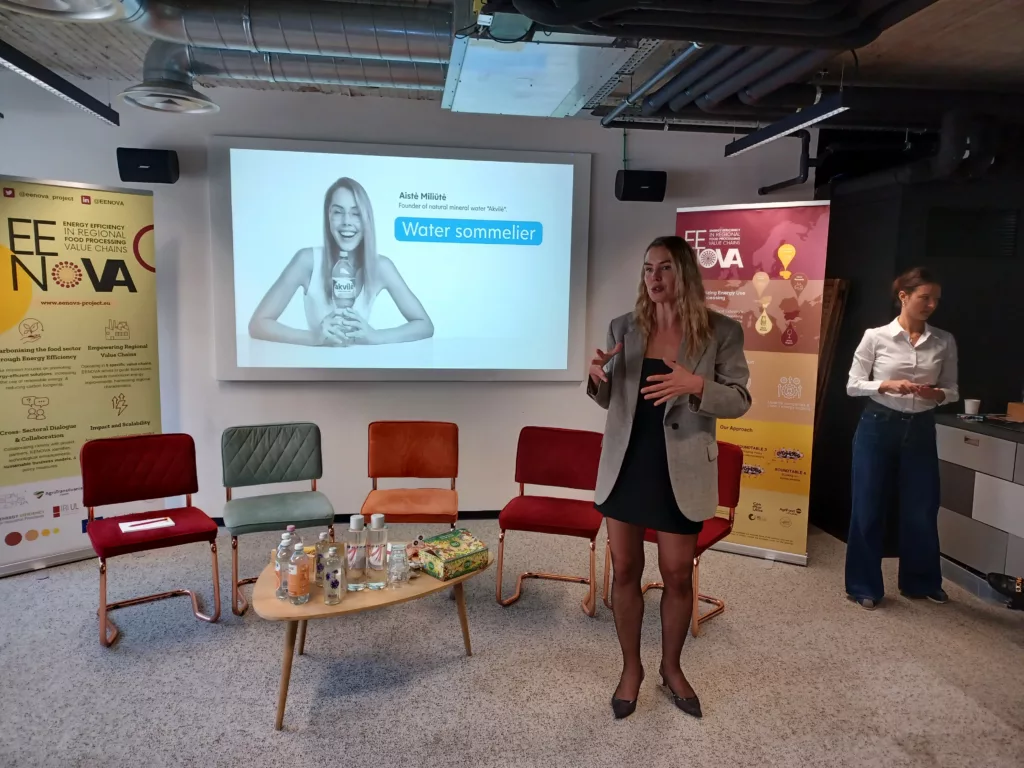
For Lithuania, Aistė Miliūtė of Birštonas Mineral Waters connected the drinks sector’s products with its production and resource needs. The pilot explored energy monitoring, solar power, heat pumps, packaging improvements and logistics. It also identified a potential collaboration between heavy beverage shipments and lightweight herbal teas, which could share transport capacity. That opportunity remainsdistinct from an implemented measure, but illustrates the kind of connection that a value-chain discussion can uncover.
Although each region faced different technical challenges, the companies shared a common need for practical support to decide where to start, understand the costs and follow through on improvements whilekeeping their businesses running.
Bringing energy efficiency to LIFE
The afternoon’s sister projects showed how LIFE Clean Energy Transition funding is helping bring their ideas to life, tackling shared energy efficiency challenges across food production, drinks and hospitality.
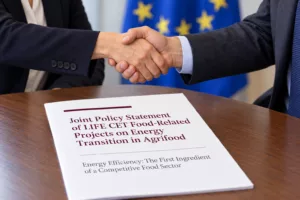
During the event, we also handed over to Oronzo Daloiso of CINEA our joint policy statement from five food-related LIFE CET projects: AENEAM, EENOVA, BETTED, AUDIT PLUS and REEValue, bringing their collective experience into the policy conversation.
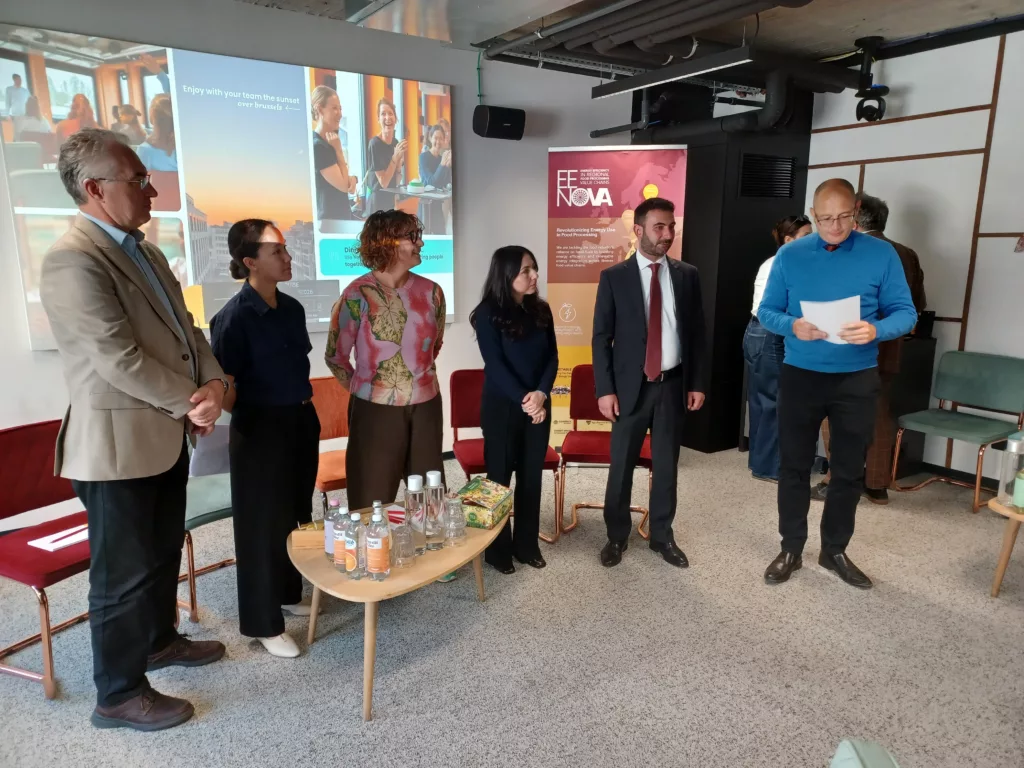
Four sister projects added their experiences to the menu. Paola Maio of the European Heat Pump Association presented BETTED’s work on the dairy value chain, including training and tools to assess efficiency measures, heat pumps, biogas and wider business benefits.
Ivana Rae Almora of Eurochambres shared EE4HORECA’s experience supporting hotels, restaurants and catering businesses. Its work highlighted the importance of accessible guidance, practical trainingand trusted intermediaries, alongside the financial and operational barriers that continue to limit investment.
Conor Molloy of AEMS presented REEValue’s approach to connecting audits with finance in food, drink and transport value chains. A clear lesson was that identifying savings does not give a busy SME the time or money to pursue them. Costed recommendations, funding guidance and attention to transport can help close that gap.
Sara Botti of Innov’Alliance introduced AENEAM’s combination of audits, capacity building and direct operational support. Its experience included individual company measures and collective approaches such as energy communities, joint purchasing and energy clubs. It also showed why support must adapt to local business cultures and working patterns.
A closing perspective on business value
Towards the end of the day, Dr Kristina Šermukšnytė-Alešiūnienė of AgriFood Lithuania and EIT Food brought the discussion back to the food and drinks market, setting the scene for the panel moderated by EEIP’s Dusan Jakovljevic.
Her presentation connected resource efficiency with the realities of selling food. Price, taste and safety shape purchasing decisions, so sustainability improvements need to work for both businesses and their customers.
It was a useful closing perspective for a day spanning policy, technology and cooperation: progress depends on giving businesses a manageable next step.
Tasting with a purpose
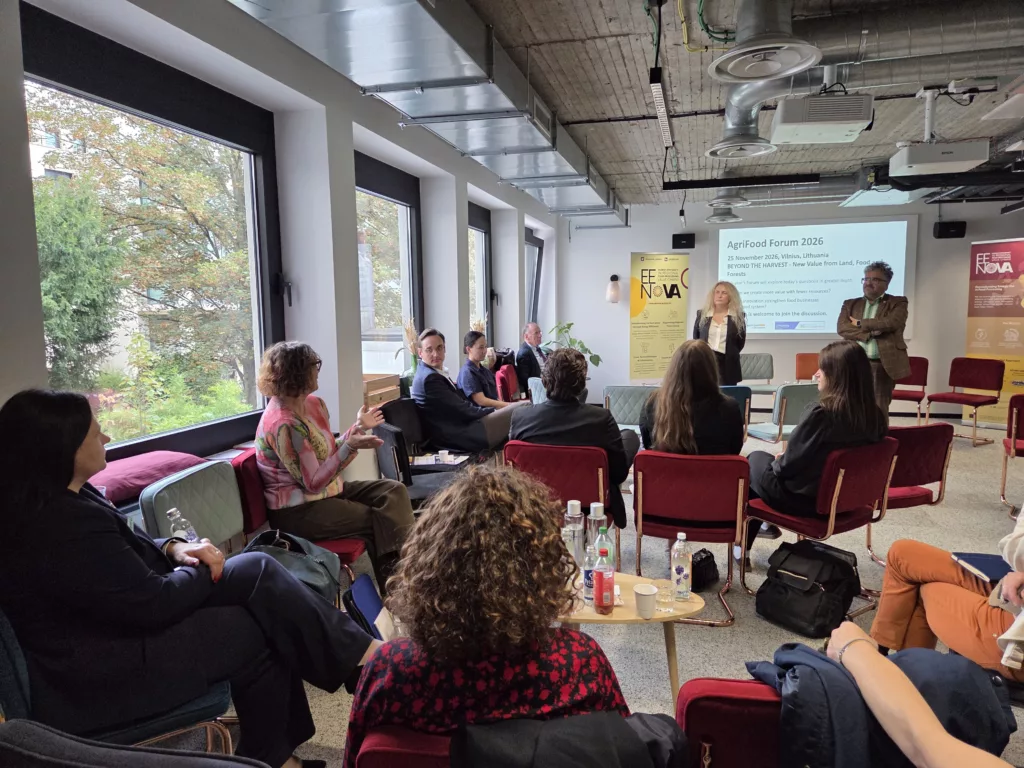
The regional products in the room gave the event’s title a literal meaning and connected the technical discussions with familiar foods and drinks.
Thank you to Planika Dairy for the Slovenian cheese, Moldovan for the Romanian charcuterie, Black Sea Gold Pomorie for the Bulgarian wine, Konditorei Jindrak for the Austrian cookies, and BirštonasMineral Water and Švenčionių Vaistažolės for the Lithuanian water and herbal tea.
Their contributions brought all five regions to the table, giving participants a chance to taste the products behind the presentations and meet the people working to make their production more energy-efficient.
Thanks to all partners, speakers, participating companies and attendees for their work and contributions. The questions and exchanges throughout the event helped connect the presentations with the concerns businesses face in practice.
The presentation slides from the whole day are available below. Use the download button to access the complete presentation master file.